Part 04 — Digital & Embedded Lending
Embedded Lending
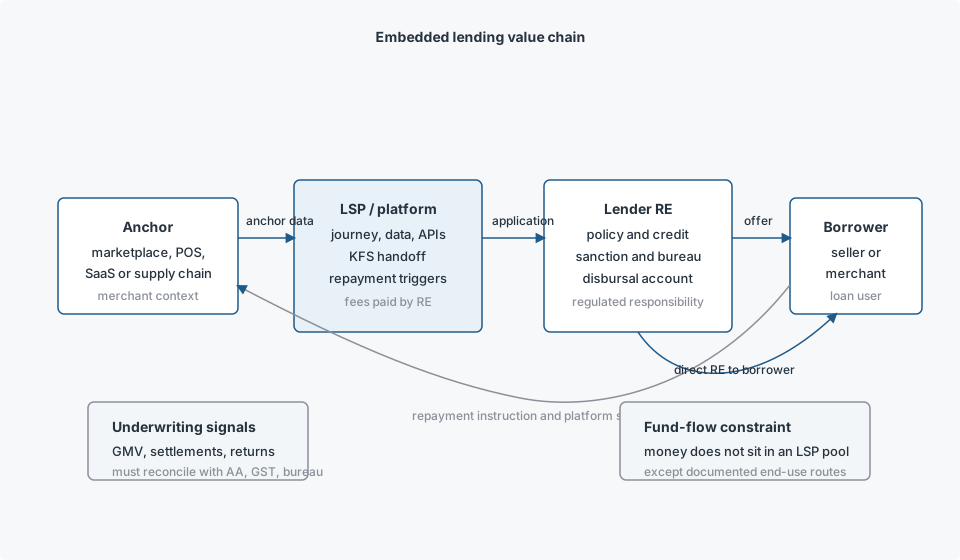
Embedded lending means credit is offered inside a non-lending workflow: a seller dashboard, payment settlement screen, distributor checkout, accounting product, logistics platform, government procurement portal or point-of-sale (POS) terminal. The borrower is not “shopping for a loan”; the offer appears when working capital need is visible in transaction data. For Indian micro, small and medium enterprise (MSME) credit, this is the practical breakthrough. A kirana distributor, online seller, restaurant, medical shop or small manufacturer may not have audited financial statements, but the anchor platform has order flow, settlement history, returns, payment failures, stock cycles and customer concentration.
Embedded lending is still lending. The Reserve Bank of India (RBI) treats the app or platform as a digital lending app (DLA) or lending service provider (LSP) when it performs lending functions for a regulated entity (RE). Under the Reserve Bank of India (Digital Lending) Directions, 2025, dated May 8, 2025, the RE remains responsible for credit assessment, KFS disclosure, direct fund flow, data consent, grievance redressal, credit bureau reporting and oversight of the LSP.
For the e-commerce seller variant, see Marketplace Seller Finance, which drills into seller-data underwriting, Meesho/Amazon/Flipkart examples, settlement-linked repayment and the RBI fund-flow nuance.
For the buy-side B2B commerce variant, see B2B Commerce & Procurement Finance, where the credit trigger is raw-material purchase and the cleanest fund flow is direct supplier payment.
Anchor-Led Distribution
Section titled “Anchor-Led Distribution”An anchor is the platform that already has the merchant relationship. In e-commerce seller finance, the anchor is a marketplace or seller-service platform. In payment-processor merchant finance, it is the payment gateway or POS acquirer. In supply-chain finance, it is a brand, distributor, business-to-business (B2B) marketplace or government procurement platform. In vertical SaaS, it is the software where invoices, appointments, inventory or subscriptions are managed.
The distribution advantage is not only cheaper leads. It is timing. A loan offer after a seller receives a large purchase order, before a seasonal stock build, or when settlement data shows rising gross merchandise value (GMV) converts better than a generic business-loan advertisement. It also reduces fraud because the lender can compare self-declared turnover with platform-observed throughput.
Typical embedded products in Indian SME practice include:
| Anchor type | Product shape | Underwriting data | Repayment design |
|---|---|---|---|
| E-commerce marketplace | Seller term loan or inventory loan | GMV, returns, ratings, cancellations, settlement history | Equated monthly instalment (EMI) or settlement deduction |
| Payment processor/POS | Merchant cash advance or short-term working capital | Card/UPI collections, chargebacks, refunds, seasonality | Percentage of daily settlements or fixed EMI |
| B2B marketplace | Buy-now-pay-later (BNPL), credit line, invoice finance | Buyer order history, supplier invoices, payment behaviour | Bullet repayment at 15/30/45/60/90 days or revolving limit |
| Anchor supply chain | Dealer/vendor finance | Confirmed invoices, stock movement, anchor approval | Direct payment to supplier, buyer repayment on due date |
| SaaS platform | Revenue-based or working-capital line | Billing, subscriptions, churn, bank data, GST | Revenue share, EMI or bullet repayment |
Rupifi is a clear B2B example. Its site positions the product as embedded credit at checkout with net terms of 15/30/45/60/90 days and says marketplaces get paid instantly; its developer documentation explains a three-party BNPL flow involving an anchor, a merchant-borrower and a lender (Rupifi, Rupifi developer docs). Razorpay Capital is a payment-processor example: its documentation says working-capital loan invitations are based on internal transaction data, with loans from NBFC partners and automatic repayment as a percentage of settlements for some products (Razorpay working capital loans, Razorpay cash advance).
Anchor Data Is Useful, Not Sufficient
Section titled “Anchor Data Is Useful, Not Sufficient”Good embedded underwriting starts with anchor data but does not stop there. GMV can be inflated by discounts, cancelled orders or related-party purchases. Payment settlements can be stable while the business has high off-platform debt. GST sales may lag platform sales if the seller uses multiple GSTINs or sells exempt goods. Bank statements may show circular transactions. A credible credit memo reconciles at least four views:
- Platform data: GMV, net sales, returns, refunds, cancellations, seller vintage, fulfilment performance.
- Banking data: average bank balance, inward credits, cheque/NACH bounces, existing loan EMIs, tax payments.
- GST or invoice data: outward supplies, input tax credit pattern, concentration by buyer/supplier.
- Bureau data: consumer bureau for proprietors/guarantors and commercial bureau for entities where available.
For a ₹10 lakh merchant cash advance, for example, a lender may cap exposure at 8-12 percent of last 12 months’ net platform sales or 1-1.5 times average monthly net settlements, then haircut for volatility, refunds and existing obligations. For a 45-day B2B checkout credit line, the lender may size limits against repeat purchase behaviour and anchor confirmation rather than annual financials. These are market-practice ranges, not regulatory caps; they must be justified by the lender’s policy and portfolio performance.
Fund Flow And Repayment Nuance
Section titled “Fund Flow And Repayment Nuance”Embedded lending often tempts platforms to control money. RBI rules deliberately restrict that. In ordinary digital lending, disbursement must go from the RE to the borrower’s bank account, and repayment must come directly to the RE’s bank account, with narrow exceptions for specific end-use disbursal and co-lending. This affects “settlement deduction” designs. A payment processor can help calculate and trigger repayments, but the legal repayment should not sit in an LSP-controlled pool account.
Supply-chain finance has a permitted practical structure when the loan is for a specific end use. The lender may disburse directly to the supplier or end-beneficiary if the product is documented that way. That is why invoice-backed and anchor-approved flows can be cleaner than generic cash loans. The loan agreement, KFS and borrower consent must make the flow explicit.
Collections also differ by anchor. If repayment is deducted from marketplace settlements, early delinquency may look low until sales drop. When a seller leaves the platform, the lender loses its repayment handle and must fall back on NACH, field collection or legal recovery. Underwriting must therefore ask: what happens if GMV goes to zero, the anchor terminates the seller, or the borrower moves volume to another platform?
Economics For Each Participant
Section titled “Economics For Each Participant”The borrower pays interest, fees and sometimes subvention-adjusted pricing. The lender earns yield and may pay the platform a service fee. The anchor earns higher sales, supplier stickiness or fee income. The platform may also provide a default loss guarantee (DLG), but under the RBI 2025 digital lending framework the DLG cap is 5 percent of the fixed portfolio’s disbursed amount and cannot substitute for underwriting.
In B2B BNPL, the anchor may bear the interest for an initial free-credit period because credit increases GMV. In merchant cash advance, pricing may look like a daily rate or factor rate in product language, but the KFS must disclose APR. In co-lending embedded models, the borrower gets one blended rate even though two REs fund the exposure; see co-lending business.